
SDSU and NAGPRA
About SDSU NAGPRA
The Native American Graves Protection and Repatriation Act (NAGPRA) and California Native American Graves Protection and Repatriation Act (CalNAGPRA) establish the legal rights of Native American Tribal Nations, Native Hawaiian Organizations, and lineal descendants to their ancestral remains and cultural items. The laws require any institution receiving federal or state funding to account for their NAGPRA/CalNAGPRA holdings, and to notify, consult with, and repatriate to culturally affiliated Tribal Nations, Native Hawaiian Organizations, or lineal descendants.
NAGPRA/CalNAGPRA at SDSU
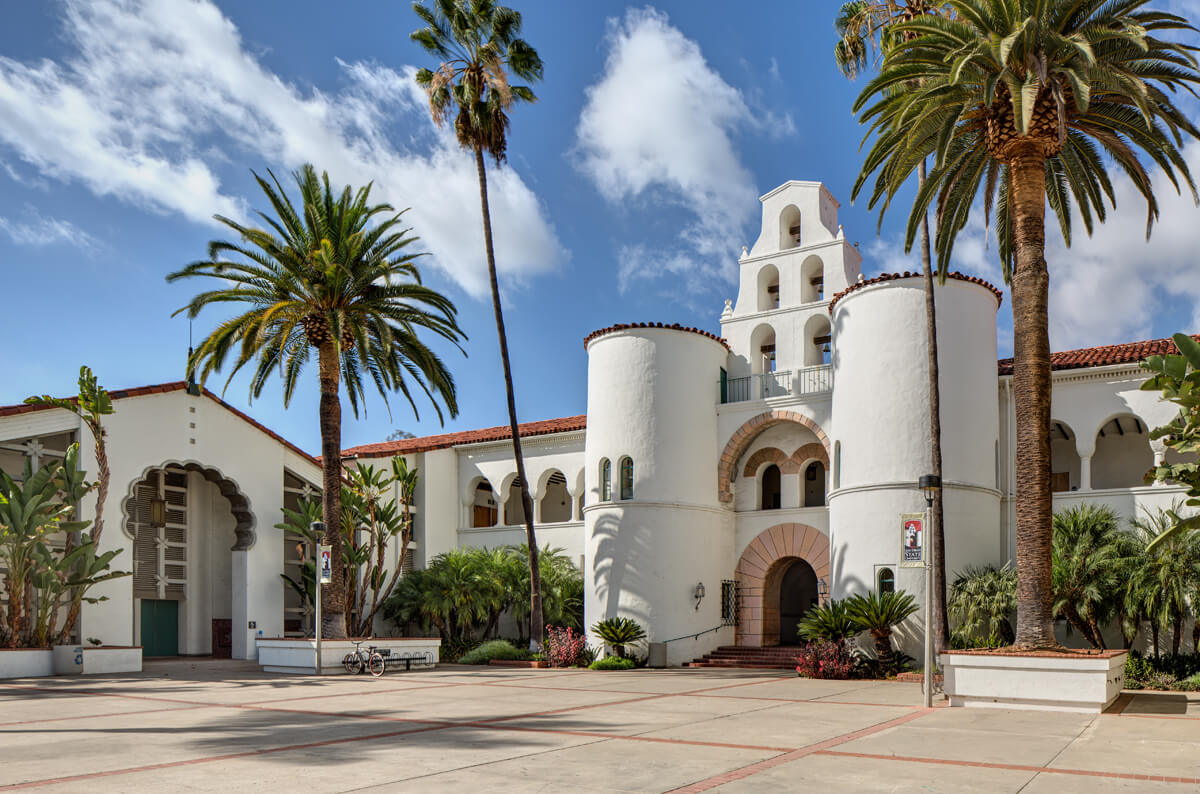
NAGPRA/CalNAGPRA at SDSU
San Diego State University acknowledges its presence on Kumeyaay land and serves a county with 17 federally recognized Tribal Nations, in addition to non-federally recognized Tribes and lineal descendants. We respect Native American legacy, sovereignty and cultural traditions, and support the full repatriation of all ancestral remains and cultural items. Priorities for SDSU’s NAGPRA work include the following actions:
- Ensuring that the university, and its research community, remains in compliance with the NAGPRA and CalNAGPRA regulations.
- Collaborate with colleagues from across the University to identify any Native ancestral human remains, associated funerary objects, unassociated funerary objects, sacred objects, objects of cultural patrimony, and other cultural items that might be in the possession of the university.
- Maintain an inventory of all ancestral remains and cultural items within the University’s holdings.
- Work with the California Native American Heritage Commission (NAHC), National NAGPRA Program, and Native American Tribes to facilitate repatriation.
- Provide both the Office of the President and the Office of the Provost with recommendations on policy and procedures, and overall implementation of NAGPRA and CalNAGPRA.
SDSU houses Native American ancestral remains and cultural items removed predominantly from San Diego County, but also from throughout the United States. SDSU is fully committed to implementing the legal requirements and spirit of NAGPRA and CalNAGPRA.
Past Communications
Accounts of SDSU's NAGPRA/CalNAGPRA holdings are available below:
CalNAGPRA
NAGPRA
University Actions
Repatriation is an ongoing and active process. While repatriation work began at SDSU in the 1990s, much remains to be done. In reprioritizing its NAGPRA efforts, SDSU:
- Regularly consults with culturally affiliated Tribes on SDSU’s holdings.
- Advocates for and partners with Tribes to support their needs and capacity for repatriation.
- Conducts campus-wide searches and surveys to update its inventory of ancestral remains and cultural items and to assess for university-wide compliance with state and federal laws.
- Offers education to new faculty on NAGPRA/CalNAGPRA and review of any cultural items and ancestral remains they may hold.
- Ensures compliance with the CSU NAGPRA Policy.
- Publishes notices of holdings in the Federal Register, enabling the NAGPRA process to proceed.
SDSU NAGPRA Oversight Committee
In accordance with AB389 Section 8028.7 and Section 8028.71, SDSU’s Oversight Committee provides oversight and guidance to ensure full compliance with CalNAGPRA and federal NAGPRA regulations. Members are formally approved for nomination by the Native American Heritage Commission and appointed by the CSU Chancellor’s Office.
In addition to providing general oversight and guidance, the Oversight Committee reviews all repatriation claims and oversees all NAGPRA processes as they are undertaken. All campus NAGPRA-related activities are regularly reported to the Oversight Committee.
Information regarding SDSU NAGPRA Oversight Committee members can be found on the Native American Heritage Commission’s site.
View the SDSU Oversight Committee bylaws (PDF).
Inquiries or comments regarding SDSU’s Oversight Committee can be submitted directly to the CSU Office of Tribal Relations.
Survey Frequently Asked Questions
The California State University (CSU) system is committed to the repatriation of Native American human remains and cultural items in accordance with the federal Native American Graves Protection and Repatriation Act (NAGPRA) and California NAGPRA (CalNAGPRA).
To help accomplish repatriation, the CSU Systemwide NAGPRA policy requires campuses to annually survey all departments/units about whether the unit or its individual faculty or staff hold Native American human remains or cultural items. After the initial survey, the campus NAGPRA Coordinator (in collaboration with tribal representatives, subject matter experts, and campus officials as needed) will review responses to determine if additional review is necessary. The NAGPRA Coordinator may perform additional review of items in departments historically engaged with Native American human remains or cultural items.
The purpose of campus searches is the thorough reporting of holdings to avoid overlooked human remains or cultural items, which cause further harm to Native communities.
Additional information on SDSU’s NAGPRA/CalNAGPRA efforts can be found on SDSU’s NAGPRA website.
The CSU Office of Tribal Relations asks that campuses conduct campuswide surveying on an annual basis. While nothing may have changed within your department or unit, other parts of the campus community may have had turnover in personnel or new faculty and staff hires, room or building moves, discarding of furniture (like file cabinets), deep cleaning efforts, renovations, or changes to their use of space. A recurring survey captures information from these changes.
It is imperative that these physical searches and surveys are a campuswide effort. There is a documented history at many institutions of Native American human remains and cultural items having been found in very unexpected locations.
Deans/Associate Deans
Deans and Associate Deans must ensure all department and unit heads within their college are aware of the survey and what is expected to be reported by the deadline.
Chairs/Directors
Chairs and Directors must ensure faculty and staff under their purview report the existence of items potentially subject to NAGPRA/CalNAGPRA. Chairs and Directors should make inquiries of all faculty and staff to determine if they are aware of any Native American human remains or cultural items that may be under the control of the university, including
objects either on university premises, located off-site, or taken from university premises to other locations, including the homes of university faculty, students, and staff. If your department has historically housed Native American human remains or cultural items, it is best practice to contact former faculty for information on any items that may have been removed from campus.
It is important to keep in mind that Native American human remains or cultural items may be located anywhere, including for example libraries, current and former research laboratories, storage rooms, or off-campus facilities.
Faculty/Staff
Faculty and staff must respond to the survey by reporting the presence (or non-presence) of Native American human remains and cultural items by the deadline. This includes but is not limited to conducting physical searches of assigned spaces such as campus offices and laboratories, providing any requested documentation, and identifying any other
locations where Native American human remains or cultural items that are the property of or on loan to SDSU may be held and if such items were removed from university premises.
Faculty and staff should also identify the origin and acquisition history of human remains and cultural items that are thought to be non-Native American; these remains and cultural items should also be reported in the survey to document that they are known to be non-Native American.
If spaces are searched and no human remains or cultural items are present, faculty and staff must still complete the survey to document that the spaces were searched.
NAGPRA Coordinator
The NAGPRA Coordinator will receive and review the survey results to identify departments and units that may need follow-up to the physical searches. With the assistance of department and unit heads, and engaging as necessary the assistance of appropriate subject matter experts (namely Tribal representatives), the NAGPRA Coordinator will
assess reported items potentially subject to NAGPRA/CalNAGPRA. The NAGPRA Coordinator will monitor survey compliance and maintain copies of all responses.
Physical inspections of department/unit/division spaces include faculty and staff offices, workspaces, classrooms, labs, common areas, lobbies, and storage rooms including ancillary structures (on- and off-campus) controlled, managed, and/or maintained by SDSU. All closets, cabinets, drawers, boxes, and storage containers within those spaces should be opened and physically examined for Native American human remains and cultural items.
If the department has exhibition or display cases containing Native American cultural items, these items must be reported in the survey and additional requirements regarding consent for exhibition must be followed. If your department includes displays of this type, please contact the NAGPRA Coordinator for more information.
Native American human remains and cultural items are not limited to items recovered from archaeological excavations. They may be from purchases with SDSU funds or gifts to the campus, departments, units, staff, and faculty at any point in time.
Some examples of Native American cultural objects are pottery, textiles (i.e. clothing), basketry, stone tools, stone ornaments, bone tools, bone ornaments, shell tools, shell ornaments, glassware, or metal objects. Any items that are known to originate from archaeological sites must be reported.
It is important to note that objects subject to NAGPRA may also include items such as animal remains, floral samples, or soil. The context of the item’s removal and acquisition (location and under what circumstances) aids in determining whether the item falls under NAGPRA/CalNAGPRA.
Identification of human remains and Native American cultural items may not be obvious. Please err on the side of caution and do not try to personally assess whether an object may be subject to NAGPRA/CalNAGPRA. Report the remains and items in question and the NAGPRA Coordinator will follow up with the next appropriate steps.
Following cultural protocols and NAGPRA/CalNAGPRA requirements, please do not move and minimize the handling of Native American human remains and cultural items. If the human remains and cultural items are found to be improperly secured or stored and/or are exposed to harmful environments, immediately relocate them to a safe and secure location and contact the NAGPRA Coordinator as soon as possible.
Report any possible findings in the campus survey and the location the remains and cultural items were found. Also include where the remains and cultural items were relocated to if relocation was necessary.
If spaces are searched and nothing is found, report in the survey that nothing was found. Be sure to identify which spaces did not contain any remains or cultural items.
If you would like to anonymously report the location or possible location of any potential Native American human remains or cultural items, you may submit your concerns anonymously via the online form on SDSU’s NAGPRA website.
There is also the option to submit the survey anonymously.
NAGPRA/CalNAGPRA applies to Native American, Native Hawaiian, and Alaska Native
human remains and cultural items. All known Native American human remains and cultural items are to be reported.
If you are unsure about the origin of any remains or cultural items, please report them in the survey and the NAGPRA Coordinator will work with you to facilitate additional review regarding the possible applicability of NAGPRA/CalNAGPRA.
While not under NAGPRA/CalNAGPRA, please also report human remains or cultural items with an established origin outside of the United States.
It is recommended that you report any personal possessions of Native American origin that you have on campus, in order to document their status as personal property and their exemption from NAGPRA/CalNAGPRA.
Yes, report the presence (or non-presence) of Native American human remains and cultural items in the searched spaces even if you reported findings in a previous survey. SDSU maintains a continuous record of all searched spaces and findings.
If you have questions, please contact SDSU’s NAGPRA Coordinator Jaime Lennox at [email protected] or (619) 594-4575.
Contacts
For any questions or inquiries regarding SDSU’s NAGPRA compliance efforts, please contact SDSU’s NAGPRA Coordinator Jaime Lennox by email at [email protected], by phone at 619-594-4575, or by mail at:
Jaime Lennox
University NAGPRA Coordinator
San Diego State University
5500 Campanile Drive
San Diego, CA 92182-6040
Provost William Tong serves as SDSU President’s NAGPRA designee and can be reached by email at [email protected].
Requesting Consultation, Submitting Claims
All requests for consultation and claims can be submitted to SDSU’s NAGPRA Coordinator using the contact information above.
Reporting Concerns or Violations
To report any concerns or submit complaints regarding campus personnel or alleged violations of the laws or CSU policy, please contact SDSU’s NAGPRA Coordinator or NAGPRA Designee directly, or complete the online reporting form. The form can be submitted anonymously.
Appealing a University Determination, Identification, or Repatriation
To submit an appeal or dispute regarding an SDSU determination, identification, or repatriation of ancestral remains or cultural items, please complete the CSU NAGPRA appeal form (PDF).
Appeals or disputes can also be submitted directly to the CSU Systemwide NAGPRA Committee at [email protected].
Reporting Native American Ancestral Remains and Cultural Items
SDSU regularly surveys the campus to account for all NAGPRA holdings, however the online item reporting form can be used to anonymously report any ancestral remains or cultural items that may have been encountered during work or studies at SDSU. While the form is anonymous, SDSU’s NAGPRA Coordinator can also be contacted directly.